FOR WORK / A CLEANING GUIDE
Your office cleaning checklist.
Decide what needs attention each visit, what can be planned less often, and who checks the work.
Currently serving Kingston & St. Andrew. We reply by email within 48 hours.
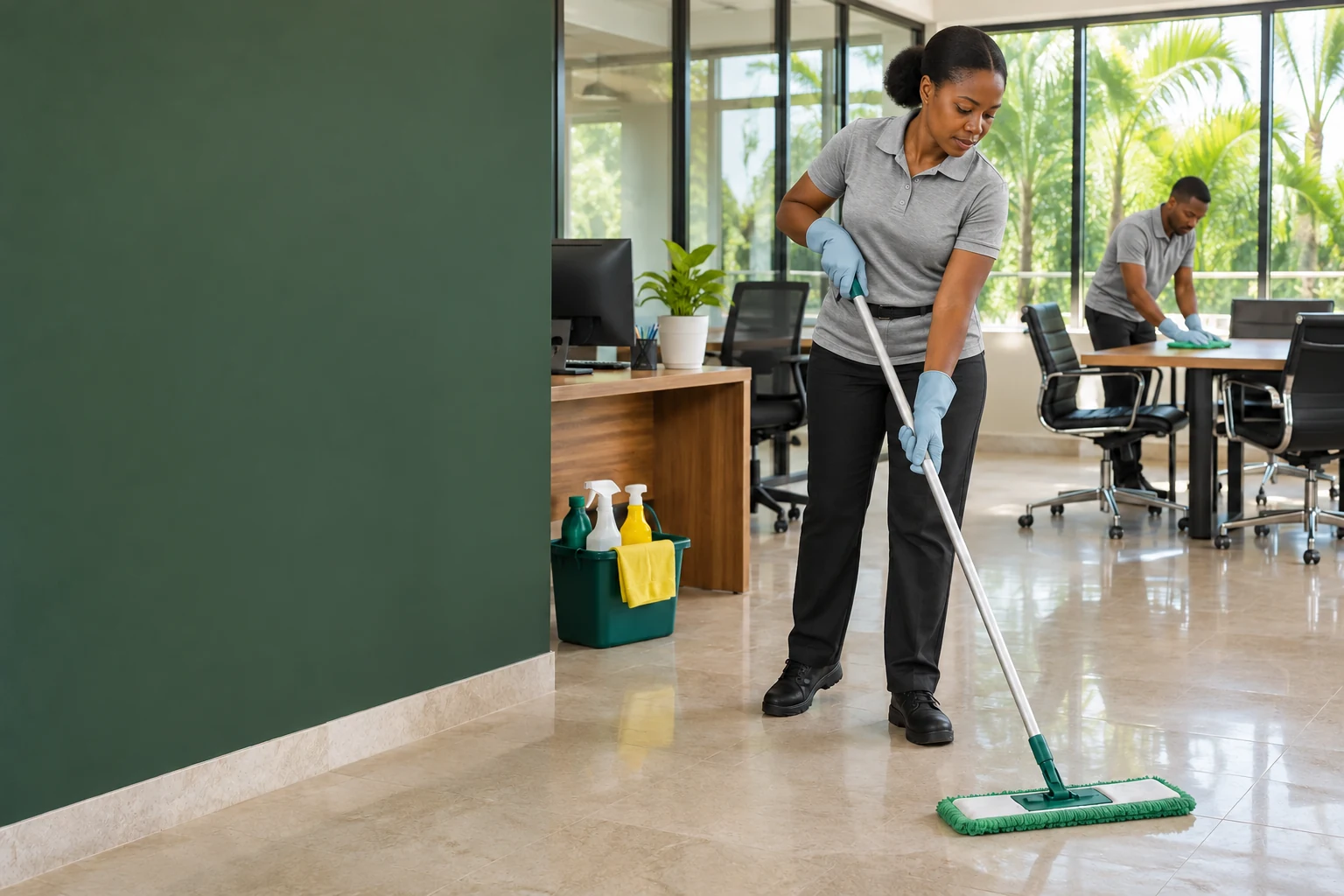
Start with how the office is used.
A reception that receives visitors all day creates different priorities from a meeting room used twice a week. Start with the people, the rooms they share and the hours when work can happen. Then turn that information into tasks someone can check.
Walk the route a visitor takes from the entrance to reception and a meeting room. Add the washrooms and staff kitchen used by your team. These are useful starting points for a brief; they do not require exact measurements.
“Clean the office” leaves room for different interpretations. “Wipe the clear reception counter, clean the two washrooms and mop the tiled entrance” gives both sides something to agree.
Choose the areas that belong on your list.
Use the checklist below as a starting point. Select the areas you want quoted, download a copy, or carry your priorities into a request. You can explain individual rooms and any exclusions in the next step.
0 of 5 areas selected. Your choices can be changed in the request.
Give each task a useful place in the routine.
Daily, weekly and monthly are planning categories, not a universal cleaning prescription. The right frequency depends on use, condition and the standard you want maintained.
- Each agreed visit
- Review the areas that accumulate visible use: entrance floors, busy shared surfaces, washrooms, kitchen worktops and ordinary waste. Tell us which matter most at your premises.
- On a separate rotation
- Discuss lower-use rooms, reachable edges and other detail tasks that do not need the same attention every visit. Write down the task and frequency rather than leaving it as “when there is time”.
- At a change or handover
- A move, a long gap between cleans or a change in occupancy may call for a more detailed first visit. Separate that starting work from the routine that follows.
If you are unsure about the schedule, say so. Give the number of people using the premises, the busiest days and the access window. We can discuss the priorities before you choose a recurring plan.
Agree who owns the small details.
Confirm who moves personal items, supplies cleaning products, replenishes tissue or soap, and checks the completed checklist. Cleaning supplies and washroom consumables are different items; neither should be assumed from a service label.
Mark private documents, screens, specialist equipment and restricted rooms clearly in the brief. A cleaning checklist is not permission to handle confidential materials or perform specialist treatment.
Before booking, agree the tasks, visit frequency, supplies, price and access arrangements.
For a forwardable buying brief, use the commercial cleaning comparison guide.